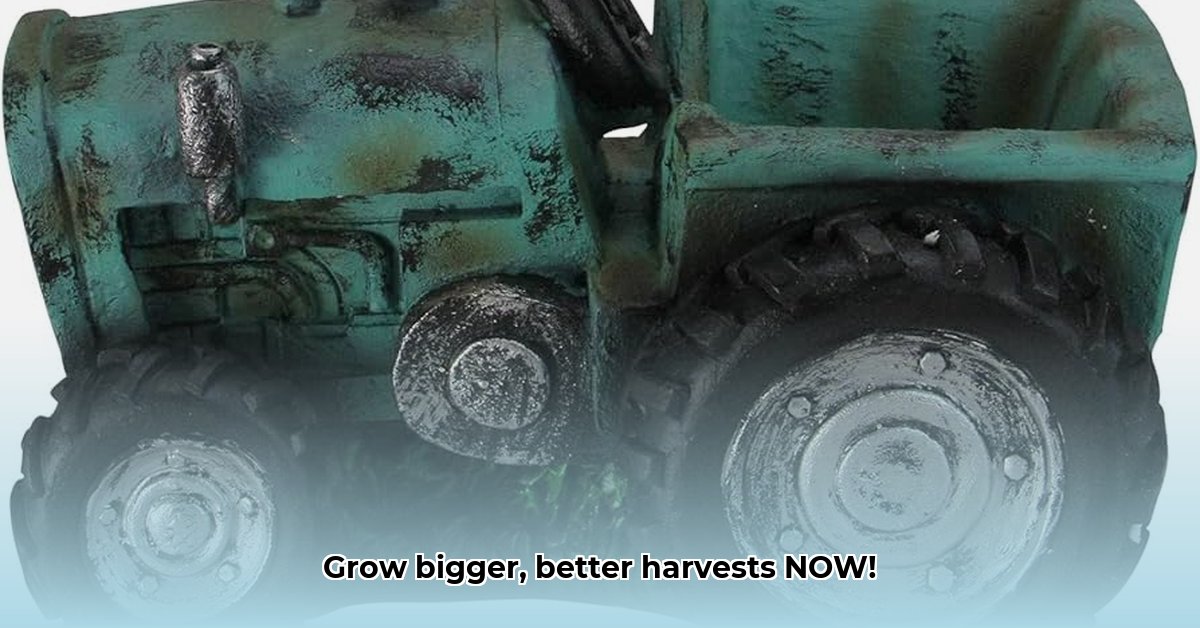
Tractor Garden Planters: Revolutionizing Your Garden
Tired of backaches and underwhelming harvests? Imagine effortlessly planting your entire garden in minutes, yielding bigger, healthier crops. That's the promise of a tractor garden planter. This isn't just about fancy equipment; it's about transforming your gardening experience – making it easier, more efficient, and profoundly more rewarding. We'll guide you through selecting the right planter, mastering its use, and ensuring long-term success. Get ready to ditch the shovel and embrace a new era of gardening where your back thanks you and your harvest overflows! For more on Case garden tractors, check out this helpful resource: Case tractor info.
Choosing the Right Planter: A Personalized Approach
Selecting the right tractor garden planter is paramount. Just as you wouldn't use a hammer to screw in a screw, choosing the wrong planter wastes time and effort. Consider these factors:
Garden Size and Layout: A small garden requires a smaller, simpler planter. Larger gardens or fields demand more substantial equipment. A detailed map of your garden, noting obstacles and terrain (flat, sloped, hilly), is crucial for making an informed selection.
Crop Type: Different planters excel with specific crops. Some are ideal for small seeds (lettuce), while others handle larger crops (potatoes, corn). Understanding your planting needs is fundamental.
Budget: Prices vary significantly. Set a realistic budget, including maintenance costs. Compare pricing across multiple vendors to secure the best deal. Look into financing if needed.
Ease of Use and Maintenance: Prioritize user-friendliness and straightforward maintenance. A complex, difficult-to-maintain planter is a recipe for frustration.
Planting with Power: A Step-by-Step Guide
Mastering your tractor garden planter requires careful planning and execution. Follow these steps for optimal results:
Step 1: Prepare the Soil: Thoroughly till the soil, removing rocks and leveling the planting area. A well-prepared seedbed is essential for germination. This seemingly simple step is critical for consistent planting depth and seed emergence.
Step 2: Attach the Planter: Carefully attach the planter to your tractor's three-point hitch, following the manufacturer's instructions precisely. Safety is paramount; any doubts should be clarified before proceeding.
Step 3: Calibrate Your Planter: Adjust settings for seed spacing and planting depth — crucial for optimal growth. Too dense planting leads to resource competition; too shallow leaves plants vulnerable. Thorough calibration pays dividends in maximizing yields and minimizing wasted effort.
Step 4: Plant!: Drive your tractor slowly and consistently across the prepared land. The planter will precisely drop seeds or seedlings at the ideal depth and spacing. Even spacing is key for maximum sunlight and nutrient absorption.
Step 5: Post-Planting Care: Gently water the newly planted area; avoid overwatering, which compacts the soil and potentially causes root rot. A thorough but gentle watering is ideal.
The Pros and Cons: Weighing Your Options
Before investment, analyze the benefits and drawbacks:
| Advantages | Disadvantages |
|---|---|
| Increased planting speed | Initial investment cost includes tractor and planter |
| Reduced physical strain | Requires sufficient space for a tractor |
| Precise seed spacing | Learning curve: requires careful instruction study |
| Efficient fertilizer application (some models) | Regular maintenance and storage considerations |
| Ideal for large-scale gardening | Not practical for extremely small gardens |
Is a Tractor Planter Right for You?
Before investing, assess your needs:
- Garden Size: Is your garden large enough to justify the investment?
- Physical Limitations: Does the reduced physical strain outweigh the cost?
- Budget: Does the initial and ongoing cost align with your capabilities?
If you answer “yes” to most questions, a tractor planter may transform your gardening practice!
Maximizing Your Results: Advanced Strategies
Enhance your planter's effectiveness with advanced techniques:
Precision Planting Technology: Explore soil sensors and GPS for superior accuracy and efficiency in resource management. Such advanced systems allow precision planting, optimizing resource allocation based on soil characteristics.
Smart Crop Rotation: Implement crop rotation to prevent nutrient depletion and pest build-up, improving soil health and long-term yields. Rotating crops is crucial to sustainable large-scale gardening.
Experimentation: Adjust planting densities and timings to find what works best in your specific environment. Don’t be afraid to experiment – each garden is unique!
Investing in a tractor garden planter can revolutionize your gardening, transforming a labor-intensive task into an efficient operation. It's a pathway to larger-scale sustainable practices, all within your backyard. Remember: careful planning and research are your pathways to success. Happy planting!